
 Chat
Chat

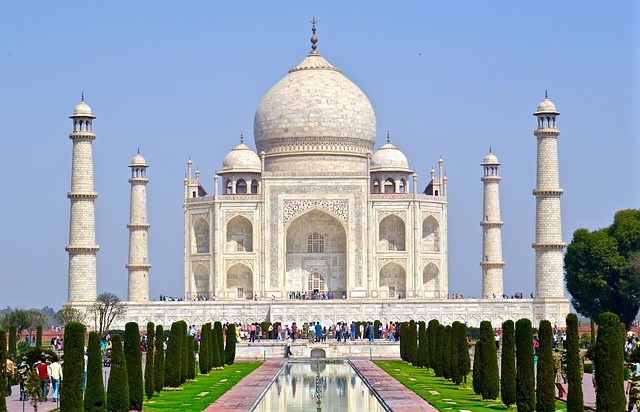 Delhi Agra Jaipur Tour -Taj Mahal Jaipur Holidays Package
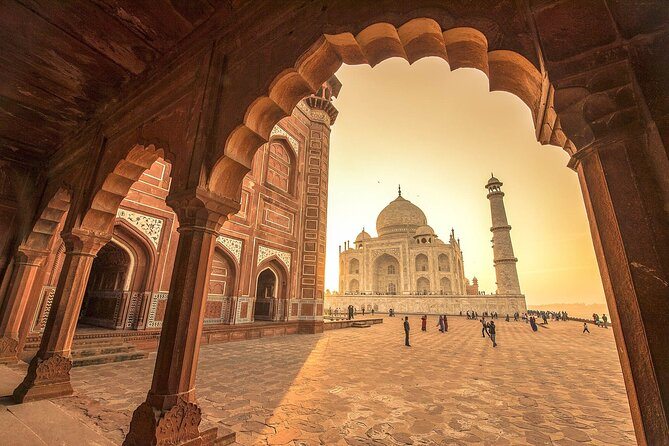 Ranthambore Taj Mahal Jaipur Tour
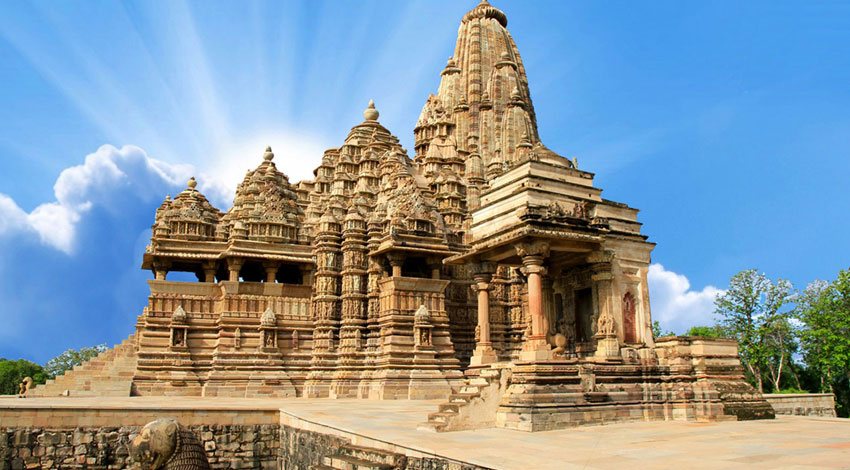 Khajuraho Varanasi Taj Mahal Jaipur tour
 Jaisalmer Udaipur Pushkar Jaipur Tour
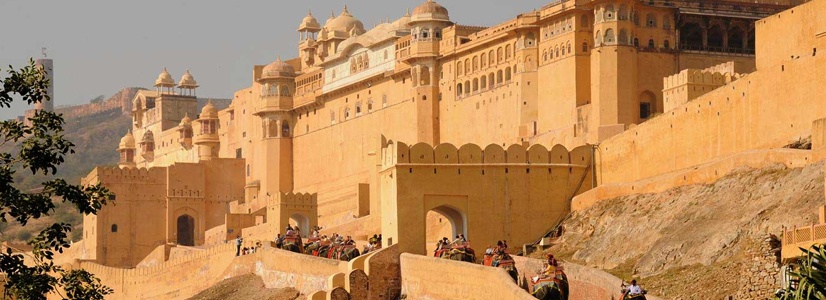 Agra Taj Mahal Jaipur Udaipur Jodhpur Tour

Embark on a mesmerizing journey through the heart of India with our Khajuraho, Varanasi, Taj Mahal, and Jaipur Tour. Discover the architectural marvels of Khajuraho's ancient temples, soak in the spiritual ambiance of Varanasi's sacred Ganges River, and be awe-struck by the eternal beauty of the Taj Mahal at Agra. Unveil the regal charm of Jaipur, the Pink City, with its majestic forts and vibrant markets. This extraordinary expedition promises an unforgettable adventure as you experience India's rich heritage, cultural tapestry, and captivating landscapes. Join us now to create memories that will stay with you forever. Book your tour today! Day 1 – Arrive Delhi Arrive at Delhi's International Airport late this evening. Welcome to India! You are met by our representative in the arrival area of the airport after you clear all immigration and customs formalities. Depart for your hotel where you will check in for your stay. Day 2 – in Delhi Breakfast at hotel• Full day city tour of Old and New Delhi Greet the morning on your first day in what is the world largest and most vibrant democracy. As you embark on your journey through this land you will experience the sights and sounds of what is India. Delhi stands as the capital of Modern India. Here you can see the mingling of the Old and New India, the ancient and the modern. Delhi is made up of seven ancient cities, spanning the period from the 11th to 20th centuries. Delhi has seen the rise and fall of many emperors, which has left behind a plethora of monuments that commemorate the grandeur and glory of bygone ages. Very few cities in the world can express such a profusion of architectural styles. Old Delhi was an ancient walled city. Mughal Emperor Shah Jehan in 1650 switched the Mughal capital from Agra to Delhi. Shah Jehan possessing an exquisite talent, especially in architecture, created the seventh city and in the process brought about Delhi's glorious renaissance. Start the day with a cycle rickshaw ride through Old Delhi. Here you will see Red Fort the most opulent Fort and Palace of the Mughal Empire. The fort is Shah Jehan's symbol of power and elegance, built behind red sandstone walls. Its main gate (Lahore Gate) faces Chandni Chowk, the perpetually congested avenue heading west from the Red Fort is filled with twisting lanes, small streets and crowded bazaars. If you peer through a portico you may see a man getting shaved, silver being weighed, or any other conceivable form of intense commerce. Also visit Raj Ghat, the memorial site of the Mahatma Gandhi; Jama Masjid, the largest mosque in India; and Chandni Chowk, the bustling and colourful market of the old city. Chandni Chowk was the commercial centre of Delhi in the old time and you will see it come alive in the morning as the trading day starts. New Delhi was designed and built by the British in the 1920's - it's a city of wide boulevards impressive Government buildings, green parks and gardens. In 1911 King George V announced the transfer of the capital from Calcutta to Delhi. The King's architects, Lutyens and Baker, set in motion the design and construction of Delhi's eight city - New Delhi. Lutyens designed an "Imperial City" having palatial-sized buildings set amid broad tree-lined avenues punctuated by Mughal style gardens, complete with fountains and shallow pools. It took 20 years to complete this immense undertaking only to have the British pack up and relinquish the subcontinent in 1947. You will visit two monuments from Delhi's past - Humayun's Tomb and Qutub Minar. Your drive takes you along the ceremonial avenue, Rajpath, past the imposing India Gate and Parliament House. Also visit a local temple. Overnight at the hotel Day 3 – Delhi to Jaipur This morning after breakfast drive to Jaipur (4 – 5 hours) where you will check into your hotel and have the remainder of the day free. Overnight at hotel. Day 4 – in Jaipur Known as the "Pink City", Jaipur is the capital of the colourful state of Rajasthan. It has the distinction of being a well planned and laid out city. As you drive through the old part of town, you will witness a life most unlike others. Witness how the city blooms during the day in a kaleidoscope of colour and sound. After breakfast depart the hotel for a half day excursion to inspiring Amber Fort. Amber Fort is a marvellous example of Rajput architecture with its terraces and ramparts reflected in the Maota Lake below. Go up the fort in a jeep. The interiors of the fort has various royal halls decorated with intricate ivory, mirror and glass work complemented by exquisite wall paintings. As you move between the rooms of this magnificent structure feel the history and visualise the pomp and grandeur of a kingdom never conquered. In the afternoon continue on your visits of Jaipur city. This afternoon venture into the city, this time on a city tour. You will visit the City Palace Museum where you can see an imposing blend of traditional Rajasthani and Mughal Art. The museum is resplendent with its collection of robes of royal princes, carpets, an armoury of old weapons, miniature paintings portraying court scenes, battle scenes and processions, Also visit the awe inspiring Jantar Mantar (an accurate observatory built in 1726 AD). Also included is a photo visit at the Hawa Mahal (Palace of Winds) - a five storied wonder with a spectacular pyramidal facade and overhanging windows with latticed screens, domes and spires. Located in the heart of the walled city, The City Palace Complex gives you an idea about the farsightedness of the founder of Jaipur Sawai Jai Singh. He left behind a legacy of some of the most imposing and magnificent architecture, art and craft structure in the city. Sawai Jai Singh built its many buildings but some of some of the structures were also built by later rulers and some of them are even dated in the in the twentieth century too. The palace is a blend of Mughal and Rajasthani architecture and the royal family still lives in a part of the palace. On entering the complex and before the palace proper lies the Mubarak Mahal, the palace of welcome or reception. Sawai Madho Singh built the palace in the nineteenth century. It was used as a reception centre for the visiting personage. The building now forms the Maharaja Sawai Man Singh II Museum and on display here are a wide array of royal costumes, some very exquisite and precious Pashmina (Kashmiri) Shawls, Benaras silk saris, Sanganeri prints and folk embroidery. An unusual display is that of voluminous clothes worn by Maharaja Sawai Madho Singh I (ruled 1750-68). Across the road from the palaces is the famous "Jantar Mantar", one of the five observatories in India . Built by Sawai Jai Singh, this is one of the largest and the best preserved. A passionate hobby of the king in the field of Astronomy, numerology, in sighted him to execute this observatory and with the help of skilled labourers, they managed to create a collection of complex astronomical instruments chiselled out of stone and most of which continues to provide accurate information to this day. The most striking instrument is the Brihat Samrat yantra Sundial, an imposing yellow edifice to the far right of the observatory complex which has a 27m high gnomon arm set at an angle of 27degree.The shadow this casts moves up to 4m in an hour, and aids in the calculation of local and meridian pass time and various attributes of the heavenly bodies, including declination the angular distance of a heavenly body from the celestial equator and altitude. This highlight of the observatory has made it a centre of attraction for the tourist visiting Jaipur. Overnight at hotel. Day 5 – Jaipur to Agra After an early breakfast depart for Agra at 0730 hrs (4 -5 hours) and en-route enjoy an excursion to Fatehpur Sikri. This is an hour's drive outside Agra. Fatehpur Sikri. - The imperial city of the Mughal dynasty between 1571 and 1584, Fatehpur Sikri was built by Mughal Emperor Akbar. The architectural grandeur of this deserted city cannot be described in words and one can only experience the aura of its magnificent edifices by seeing them. Fatehpur Sikri is the most popular day excursion from Agra, the city of Taj and capital of invincible Mughals for a long time. Today, as one enters Sikri from the Agra Gate, one of the nine gateways on the way to the palace complex, Diwan-I-Aam, or the hall of public audience appears first. It is a huge rectangular walled-in courtyard where petitions were heard, proclamations made, ambassadors received and entertainment programmes held. Ponder the mysterious desertion of this capital city that was dramatically abandoned a few years after it was built. It was a veritable fairy tale city and its 'ruins' are still in a pristine condition. It is not hard to imagine what the court life must have been like in the days of its grandeur. Drive on to Agra where on arrival you will check-in to the hotel Later this evening proceed on to visit Taj Mahal. The area around the Taj Mahal is a protected area and the bus parking is approximately one kilometre away from the monument. Here we disembark and board battery buses to the Taj That magnificent monument of love – The Taj Mahal, was built by an emperor in memory of his beloved queen. Construction of the Taj Mahal began in 1631, and is believed to have taken 22 years to complete, with over 20,000 craftsmen working round the clock. The design and construction is said to be that of the legendary architect, Ustad Ahamad Lahori. Legend has it that once construction was completed, Shah Jehan had Lahori's hands cut off, and blinded, so he would never be able to duplicate the structure. What makes the Taj Mahal unique is its perfect proportions, distinct femininity, medium of construction and ornamentation. Its marble exterior reflects rose and golden tints at sunrise and sunset, while it is dazzling white during the day. It is impossible to visualize the Taj Mahal in any surrounding others than its paradoxical garden. Paradise, in Islam, is visualized as a lush garden where running streams flow. When the Mughals brought this concept to India they elevated it to heights of incomparable artistry. Overnight at the hotel. (TAJ MAHAL IS CLOSED ON FRIDAYS, PLEASE PLAN YOUR TRAVEL DATES ACCORIDNGLY) Day 6 – Agra – Jhansi (Train) - Jhansi –Khajuraho via Orchha Breakfast at hotel. Transfer to station to board train to Jhansi. Pick up from Railway station and drive (04 Hrs ) to Khajuraho via Orchha Visit Raj Mahal, the first palace within the Orccha citadel was built by Raja Rudra Pratap, but completed by his successor, Madhukar Shah. Rani-kaMahal, built for Madhukar Shah's wife, is of notable interest. Her ornate bedroom was decorated with beautiful murals depicting scenes from Ramayana and various incarnations of Lord Vishnu. Jehangir Mahal built by Bir Singh Deo is probably the most striking palace in Orchha with its elegant hanging balconies, countless windows with stone pierced screens and a beautiful gateway decorated with turquoise tiles. It was built in honour of Mughal emperor Jehangir during his visit to Orchha. The painted palace of Rai Praveen Mahal was built for the beautiful courtesan and poetess, Rai Praveen, by Raja Indramani, who had great affection for her. Sheesh Mahal built in the 18th century has little of its past splendour, but offers sweeping views of the town from the terraces. It's a heritage hotel now. Upon arrival check-in at your pre booked hotel . Overnight in Khajuraho. DAY 08: JODHPUR – RANAKPUR - UDAIPUR This morning, drive to Udaipur, 260 km (approximately five hours) from Jodhpur. The drive today takes you across the Aravali Hills, the older mountain range in the world. The scenery along the way is superb and you will see many vignettes of Rajasthani rural life. Your first stop this morning is at the white marble temples of Ranakpur. Considered one of the architectural gems of this area, these profusely and intricately carved temples belong to the Jain religion. The stunning carvings are in contrast to the dictates of simplicity and austerity promoted by this religion. On arrival in Udaipur, check-in at hotel. This evening, unwind with a boat ride on the waters of Lake Pichola. Overnight, stay at hotel. Day 7 – Khajuraho to Varanasi (flight) Breakfast at hotel. Morning half day city tour of Khajuraho Khajuraho was founded in the 9th and 10th century by the rulers of the Chandela Dynasty, and influenced by Tantrism. Eroticism becomes a theme of philosophical interest and the aim is sublimation of sexual relationship in the Sexual act or " Maithun", women being regarded as the incarnation of the divine energy or "Shakti". It is also possible that the carvings of Khajuraho were influenced by "Kama Sutra", the famous treatise on erotic arts written by Vatsyayana in the time of the Guptas. The erotic love making images of celestial nymphs, gods and goddesses sculpted in delicate detail have caught the imagination of people from all over the world. Morning visit the western group of temples. Western is the largest and best known. All but three temples, which are built of local granite, are constructed with hard river sandstone dug from the east bank of the Ken River, 13 miles to the east. None of the temples are enclosed, rather they are erected on high masonry platforms, each on an east-west axis. It is their detailed sculpture which gives Khajuraho its appeal and importance. Less than a tenth of it can be called 'erotic'. Numerous interpretations have been given for the erotic sculpture but there is nothing sordid about these inspired carvings showing beauty and voluptuousness of the female form. Most of the temples are 'banded' by horizontal panels of statues. The purvasins, or divine ladies, are shown engaging in common place human activities such as having a bath, feeding a bath, getting dressed and applying makeup. Figures of Lord Shiva often protruded from the band. The long frieze with scenes of battles, processions and hunting that rind the base of the Lakshmana temples are some of the best examples of narrative sculpture. Afternoon transfer to airport to board flight for Varanasi. Upon arrival, assistance and transfer to hotel . Varanasi, the holy city of India, is also known by the name of Kashi and Benaras. Kashi, the city of Moksha for Hindus since centuries, is known for its fine-quality silks, 'paan' and Benares Hindu University and Avimukta of the ancient days, Varanasi is the most popular pilgrimage point for the Hindus. One of the seven holiest cities, Varanasi city is also one the Shakti Peethas and one of the twelve Jyotir Linga sites in India. In Hinduism it is believed that those who die and are cremated here get an instant gateway to liberation from the cycle of births and re-births. Evening visit to Ghats to witness evening Aarti.Overnight at hotel. Day 8 – Varanasi to Delhi (flight); depart Delhi Early morning boat ride followed by city tour Situated on the west bank of the Ganges, Varanasi extends back from the riverbank ghats to a winding maze of picturesque alleys overlooking tall houses alongside, dotted with temple It is a fascinating area to walk around. Varanasi today, is also a centre of education, art and craft. The city has given birth to many academicians, musicians and artists of world acclaim. As a centre of art and craft it has a vast repertoire, right from silver, brass, copper artefacts to perfumeries and trinkets. The magnificent Krishna Balarama Temple built in 1975 by ISKON has today become Vrindavan's most popular temple and has one of the highest principles of Deity worship and cleanliness. Hare Krishna devotees from around the world can be seen here throughout the year. The Bharat Mata Temple, Alamgir Mosque, Durga Temple, Tulsi Manas Temple, Archaeological Museum and Ram Nagar Fort are just some of the places worth visiting in Varanasi Breakfast at the hotel Later proceed for excursion to visit Sarnath - Sarnath 10 Kms. from the centre of the city, Sarnath symbolizes the birth of Buddhism. It was here that Buddha revealed his doctrine and founded his monastic community. The museum at Sarnath is amongst the most important in India and contains carvings representing a whole range of styles - archaic, the Mathura School, Gupta, past Gupta and Medieval - covering work of sculptors from the 3rd century B.C. to the 12th century A.D. Afternoon transfer to airport to board flight for Delhi. Upon arrival in Delhi, transfer to International airport to board flight for onward journey. |
|
| Book now |
